



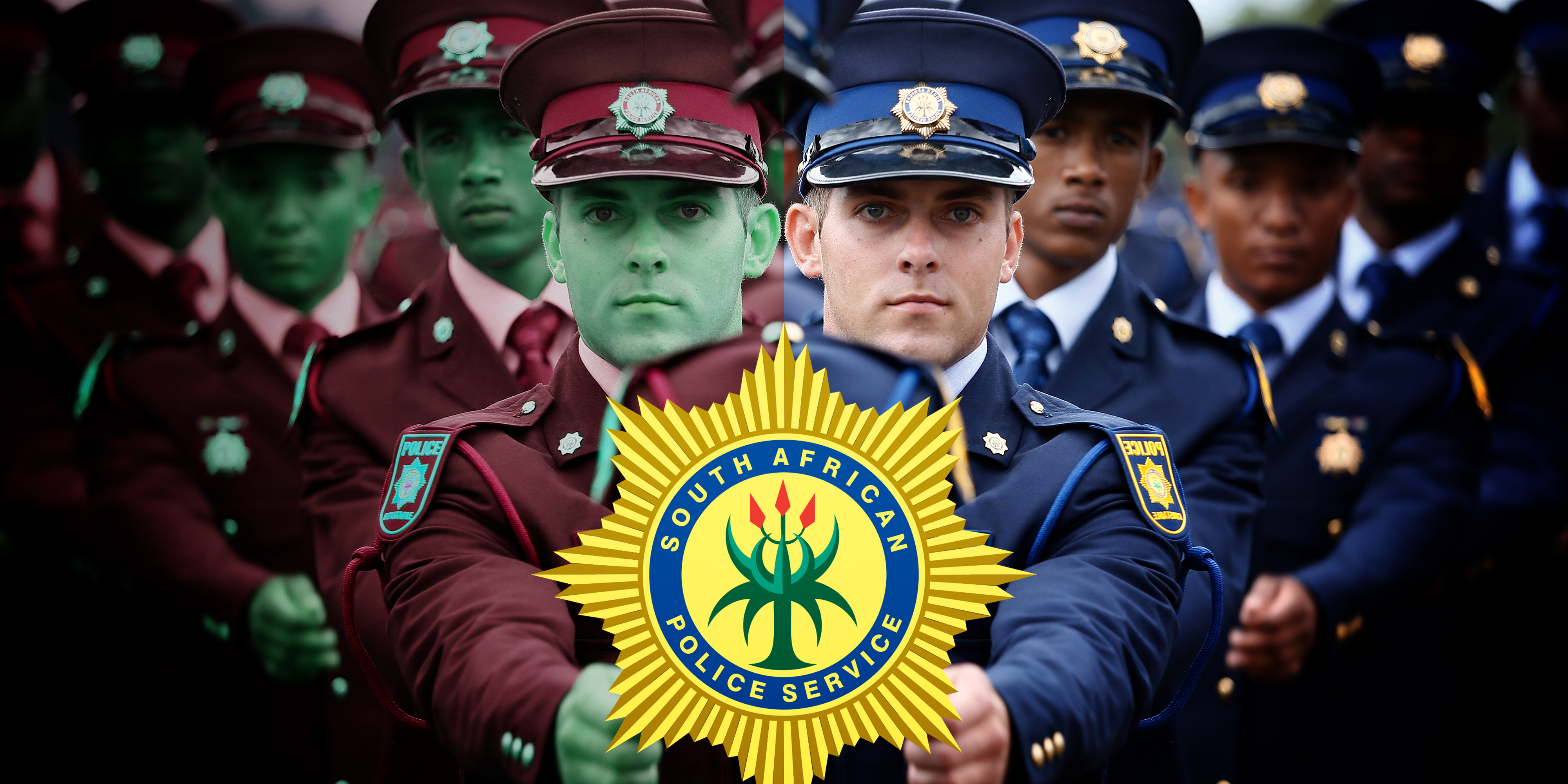
 PRETORIA, SOUTH AFRICA – DECEMBER 21: Newly trained police officials perform a drill during the South African Police Services (SAPS) pass out parade at SAPS Academy on December 21, 2018 in Pretoria, South Africa. (Photo by Gallo Images / Phill Magakoe)
First published by ISS Today
Trust is the glue that binds people together. When people trust in democratic institutions they are free to interact and trade with strangers, restrain violent impulses and obey the law without fear of being cheated. But in South Africa, trust is sorely lacking.
Research suggests that one of the most reliable ways to build trust is through education. Reducing inequality also improves trust. Solving South Africa’s education and inequality crises is crucial, but will take many years.
In the short term, government can increase public trust by demonstrably tackling corruption. The various commissions of inquiry under way, along with President Cyril Ramaphosa’s efforts to reform the criminal justice system, must be supported.
This includes the appointments of Lt-Gen Godfrey Lebeya and Advocate Shamila Batohi to head the Hawks and National Prosecuting Authority (NPA) respectively, the establishment of a special directorate in the NPA to take on State Capture, and the special tribunal to fast-track civil claims linked to corrupt state contracts. With funding, support and leadership, these entities could generate short-term wins that help grow public trust.
A lot can be deduced by measuring trust between people. In societies where people trust one another, there is usually more wealth, volunteerism and political stability, and less inequality and violence. Interpersonal trust may also predict trust in public institutions.
Research shows that when people trust and view the police as legitimate, they are more likely to identify with the state, cooperate with the police and obey the law in their absence. When people approve of police, policing can contribute to uniting a nation and building a common identity.
The same is probably true of other government services. When people feel that the state cares about them, they are more likely to feel part of the community the state represents and to abide by its rules.
But a major survey of adult South Africans conducted during August and September 2018 reveals a country with low levels of trust in police and the public service in general. The Afrobarometer study found that 53% of people felt public officials did not treat them with respect.
Fewer people trusted police than any other institution, with 66% of respondents saying they trusted the police “just a little” or “not at all”. Sixty-five percent felt the same about Parliament and local government councils, and 60% mistrusted the African National Congress (see table below). Opposition parties were the least trusted group of all.
| ‘How much do you trust …’ | ‘Not at all’ or ‘Just a little’ |
| Opposition political parties | 70% |
| Police | 66% |
| Parliament | 65% |
| Your local government council | 65% |
| The African National Congress | 60% |
| The Independent Electoral Commission | 58% |
| The president | 57% |
| The premier of this province | 56% |
| South African Revenue Service | 50% |
| The Public Protector | 50% |
| Judges | 49% |
| Courts | 46% |
| Traditional leaders | 43% |
| Religious leaders | 43% |
Trust is eroded by corruption. Sixty-five percent of respondents believed corruption had increased in the preceding year. Highlighting the harms of South Africa’s inequality, most felt that “a rich person” was more likely than “an ordinary person” to be able to pay a bribe to avoid taxes (80% vs 51%) or going to court (83% vs 57%), or to register land that did not belong to them (83% vs 54%).
Such perceptions highlight how inequality divides society, as people perceive one another as belonging to different groups governed by a state that unevenly distributes access and rights between them (eg “rich” vs “ordinary”). Trust is not easily fostered in such contexts.
The survey also reveals clear correlations between trust in institutions and beliefs about institutional corruption. The more corrupt South Africans believe officials to be, the less likely they are to trust them.
Forty-nine percent of respondents believed that “all” or “most” police were involved in corruption, followed by 45% for local councillors (see table below). Almost a third of respondents believed most tax officials, judges, NGOs, religious and traditional leaders were involved in corruption.
‘How many of the following people do you think are involved in corruption …’ | ‘All’ or ‘Most’ |
Police | 49% |
Local councillors | 45% |
Business executives | 37% |
Tax officials | 33% |
Judges and magistrates | 32% |
30% | |
Religious leaders | 28% |
Traditional leaders | 26% |
Experiences of corruption are even more worrisome. Of the 25% of respondents who requested help from police in the year preceding the survey, 12% paid a bribe, gave a gift, or did a favour to get their assistance.
Of the 27% of respondents who interacted with police at a checkpoint, during a traffic stop, investigation or related encounter, 26% gave a bribe, gift or favour to avoid a problem. As self-reported corruption, these figures are both relatively robust and indicative of the minimum levels of actual corruption.
South Africans’ low levels of trust will take years to correct, but short-term gains can be made by improving accountability. This can be achieved by prosecuting and punishing corrupt state officials and their associates, whether they be presidents, politicians, police or plutocrats. President Ramaphosa’s reforms must therefore proceed with conscientious haste. DM
Andrew Faull is a senior researcher, Justice and Violence Prevention, ISS