




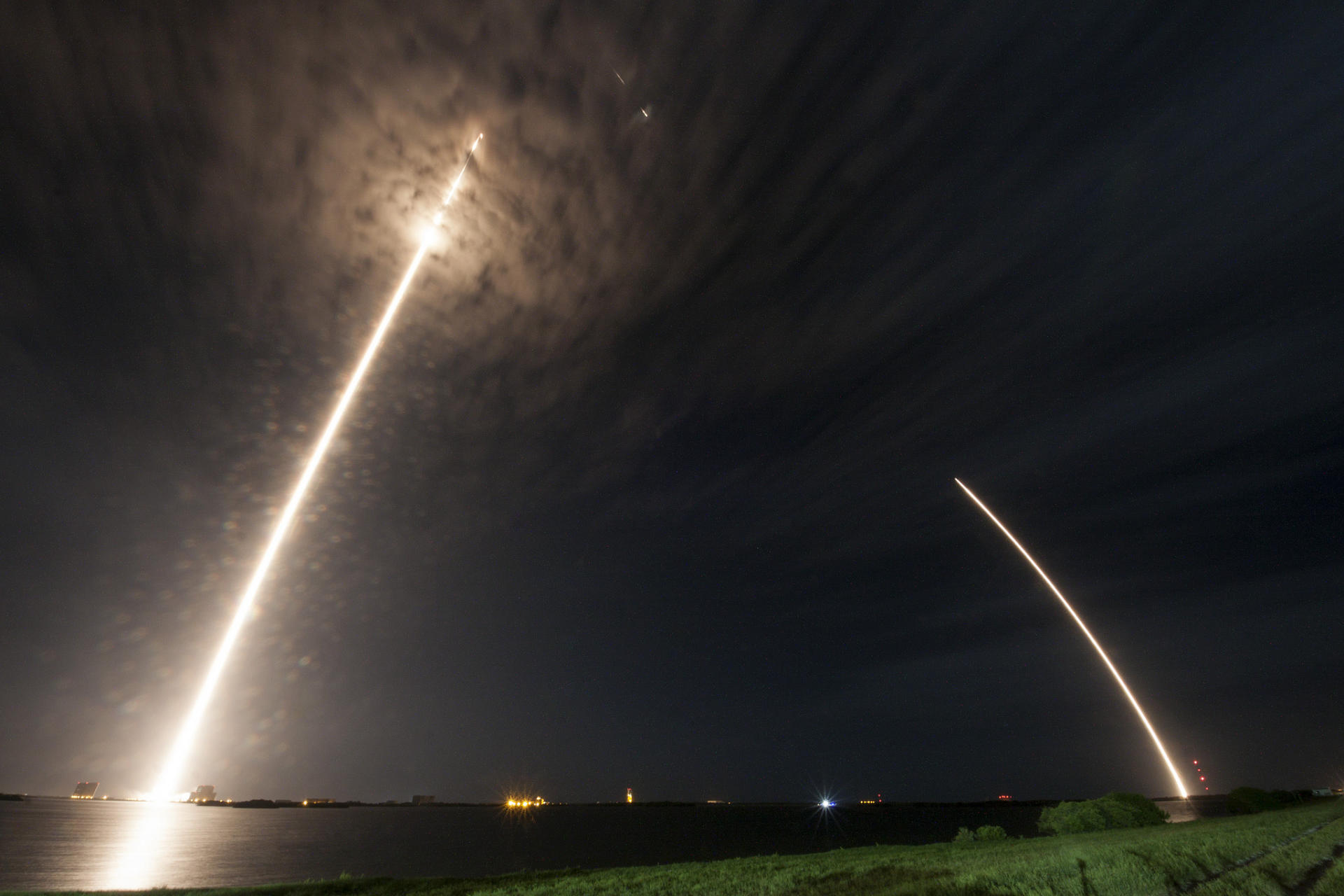
 A handout picture made available by SpaceX shows the liftoff of the SpaceX Falcon 9 rocket and Dragon spacecraft from NASA's Kennedy Space Center in Cape Canaveral, Florida, USA, 18 July 2016. The unmanned mission, known by the designation CRS-9, is ferrying supplies to the crew of the International Space Station, as well as an internal docking adapter which will provide a standardized coupling mechanism on the station for visiting government and commercial spacecraft. EPA/SPACEX / HANDOUT HANDOUT EDITORIAL USE ONLY
 The Falcon 9 rocket lifted off Thursday at 8:45 p.m. local time from Cape Canaveral Air Force Station in Florida. SpaceX also landed the rocket’s first stage on a drone ship in the Atlantic Ocean minutes after the launch.
While most rocket launches carry one payload, “ride-sharing” and secondary loads are becoming far more common in the industry. Nusantara Satu is Indonesia’s first high-throughput satellite that will improve Internet connectivity in the region, according to a SpaceX press kit. The Israeli craft Beresheet, which competed in the Google Lunar XPrize, will travel to the moon after deployment using its own power.
The third payload is an experimental small spacecraft from Air Force Research Laboratory for a one-year mission.
SpaceX set a company record last year with 21 launches for customers including commercial satellite operators and the U.S. military, and Thursday’s launch is its 70th total.
The more important milestone that’s a focus for this year is SpaceX’s first flight with humans on board. The company is competing with Boeing Co. to be the first to ferry American astronauts to the International Space Station as part of NASA’s Commercial Crew program.
SpaceX’s first uncrewed demonstration flight, known as Demo-1, is slated to take place at 2:48 a.m. ET on Saturday, March 2. NASA has scheduled a mission overview and flight readiness review briefing for Friday, Feb. 22, at about 6 p.m. ET. DM