



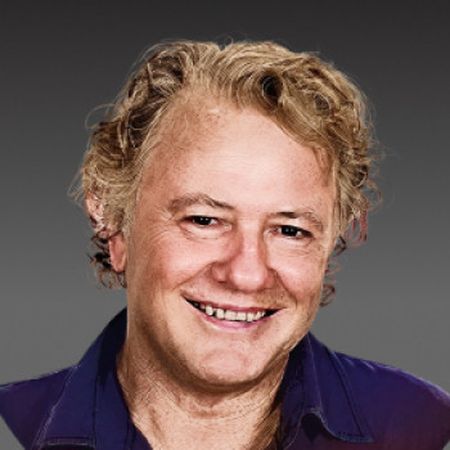

The carefree cynicism with which Jihadi Omar Hammami extols the virtues of young Americans joining the cause of killing as many nonbelievers as possible is offset by the sad resignation in his Syrian-American father’s voice when he says, “I realised it was the end of life as we knew it. It was devastating for both of us... He’s our only son. We only have one son, and now we have none.” This spoken against a video clip of a little boy running in a garden. With the same carefree cynicism, Omar Hammami, a.k.a. Abu Mansoor Al-Amriki (the last part of which which means The American), threw away his life in September 2013.
Being a NOVA documentary for PBS, they come at it from a scientific perspective, so there are lots of very learned talking heads and the odd chart and graph. But this is no classroom yawn, because writer, producer and director Miles O’Brien – who is also a PBS Newshour science correspondent – chooses to walk a very human path through the tale, by placing the story of one particular Jihadi at the centre, with everything else falling into place around that.
That jihadi is American Omar Hammami, born in Daphne, Alabama, deep in the US Bible Belt, to a southern belle mom and a Syrian Arab dad. Shafik Hammami never prayed or went to the mosque, though mom Debra, a former schoolteacher, takes the boy to church and urges him not to tell his dad. You have to think that Shafik may not have wanted his boy to become a fundamentalist, knowing where that can lead – so best to keep him out of Southern Baptist churches then. There’s food for ironic thought there.
In 8th Grade, young Omar heads off to Syria having accessed open source intelligence off the internet, what a commentator describes as “data hiding in plain view” – one of the key aspects of the new terrorism age that the documentary addresses. This is not when he becomes radicalised but the start of that journey. Even when two planes flew into the twin towers of Manhattan’s World Trade Center in 2001, he remained equivocal. But when the US army led coalition forces into Baghdad in 2003, the transition was done. He and a new friend in his home city, Daniel Maldonado/adopted Muslim name Daniel Aljughaifi, hook up in online chat rooms (another aspect of this new world the doccie explores) and they become best friends. He guides Omar/Abu on his journey to the point where Omar announces with glee, “I have become a Jihadi!”
Watch the official Netflix trailer:
From here on, Omar is Abu, or sometimes his online handle of Abu M. What to do next but go to Somalia to join al-Shabaab, with whom he will have an uneasy relationship. By now suicide bombers have long been a factor in this new world thanks to their perpetuation by Tamil Tigers and, in Africa, by al-Shabaab, the continent’s deadliest terror organisation. The al-Shabaab leadership is at first very taken with the young American and is quick to tap into his mix of charisma, computer skills and fluency in Arabic, as O’Brien’s commentary tells us.
His makes his “debut” as a known terrorist on Al Jazeera as Abu Mansoor Al-Amriki, saying, according to the New York Times:
“Oh Muslims of America, take into consideration the situation in Somalia. After 15 years of chaos and oppressive rule by the American-backed warlords, your brothers stood up and established peace and justice in this land.”
Video becomes his chosen vehicle. During an ambush at Bardale in Somalia in 2009, al-Shabaab releases a YouTube propaganda video tailored to recruit more Americans, in which Abu stares candidly into the camera while on bush patrol, and, with a wry smile, says, “We’re waiting for the enemy to come.” They’re going to try to blow up a vehicle, he says, “and kill as many people as we can.” He becomes a bit of a media sensation.
He pushes the social media bar further by penning a series of rap songs, in videos of him rapping while on patrol, with lyrics like, “We’re sending missiles through the streets/ Destroys tanks, ‘copters and Navy fleets”. As Peter Bergen, author of United States of Jihad, puts it, he promotes Jihad as a “normal career choice”.
Twitter, Facebook et al become ripe for exploitation. In Nairobi in 2013, during the Westgate mall atrocity, the attackers live-tweet as they kill, for hours, which becomes a social media turning point. Before this, the documentary observes, the right to freedom of speech trounced a perceived need to police such off-the-cuff tweeted content. For the first time, Twitter was actively deleting content as it was tweeted.
Islamic State then, the doccie observes, “took that concept and multiplied it by a million”. Facebook accounts would be closed but “repeat offenders simply opened new accounts again and again”. Facebook took a claimed zero tolerance approach, but a “tsunami of content” continued to be posted every day.
Facebook’s Monika Bickert, who is head of global policy management, is hardly convincing when she says, “We don’t allow beheading videos.” Because “persistent terrorists find a way”, as anyone who has viewed a beheading video knows.
Watch 15 Years of Terror: A Time Lapse of all terrorist attacks with more than 20 fatalities between 1.12.2000 and 13.11.2015 – The Daily Conversation
By 2012, Omar/Abu is back in a YouTube video, but this time with a plea for his life. Al-Shabaab once loved the traction his videos brought, but relations have chilled. A shaken al-Amriki tells the camera: “I record this message today … because I feel that my life might be endangered by al-Shabaab due to some differences that occurred between us regarding matters of the Sharia and matters of strategy.”
This, says JM Berger, a specialist in studying extremism, is a Big Deal. Berger is an interesting character, because he befriended his Islamist quarry in the same sort of online chat rooms that “Abu M” used to recruit young Americans. Their exchanges are fascinating, and this is another indication of how anti-terrorist operatives are using the same media to counter their recruiting and consequent terror attacks.
Berger, on camera, talks about how accessible and humorous Abu M is. On one occasion, Abu M asks “JM Berger” if he had ever considered switching sides.
JM Berger replies (and we see the thread): I’d miss the music, bikinis and bacon too much.
To which Abu M retorts: I c ur bikinis and raise u 4 wives in this life, 72 in next!
A terrorist on the front line, as the commmentary goes, debating and even joking, “with an AK47 in one hand and a global megaphone in the other”.
And Abu M admits to why al-Shabaab has turned on him. “Al-Shabaab has changed strategy from choosing the best of legit targets to hitting whatever target they can hit and then legitimising it later.” A terrorist with rules, who evidently stood up and said as much to the al-Shabaab leaders and would soon pay for it.
By March 2013 there’s a $5-million bounty on his head and al-Shabaab assassins are coming for him. Not long after, he is shot in the neck.
He takes to Twitter again.
JM Berger: Seriously? U shot?
Abu M: Yeah. Sux.
It’s only a graze. Abu M uploads a photo. JM Berger offers to help him get a deal in the US. Abu replies no, but thanks him for his compassion.
On 3 September 2013 Abu M does a Voice of America interview. Nine days later he is killed in an ambush. The little boy running in the garden is dead.
JM Berger composes his epitaph: “The meaning of Omar’s life ended up being conflicted at best, and kinda empty at worst. His story is just a cautionary tale about why you shouldn’t join these groups.”
The documentary wraps by answering its own question: does terrorism respond to an invention? “The idea is gaining new traction in the West.”
Embodying this invention is Mubin Shaikh, a Toronto counterterrorism expert who is a leading advocate of deradicalisation. He should know: he himself is deradicalised.
The simplicity of the conclusion belies how tough the job will be to achieve it: If you can be radicalised, you can be deradicalised. DM